
Craps: Complete How-To Play Guide, Rules, Bets & Strategies
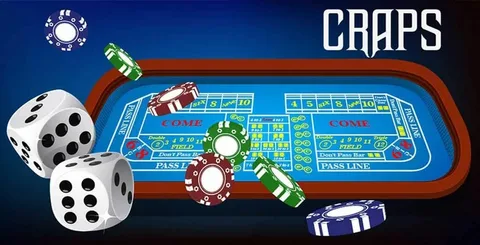
Craps is a fast-paced dice game where players bet on the outcomes of rolling two six-sided dice. The craps table might look intimidating at first, with all its markings and betting options, but the basic game is actually pretty simple once you get going.
The core idea in craps is that a shooter rolls the dice while everyone else bets on whether that shooter will win or lose. The action starts with a come-out roll—if the shooter rolls a 7 or 11, that’s an instant win, but if they roll a 2, 3, or 12, it’s an instant loss.
Any other number becomes the “point.” The shooter then tries to roll that point again before hitting a 7.

What Is Craps?
Craps is a dice game where players bet on the results of rolling two dice. You can play it in casinos against the house or just for fun as street craps with friends.
History of Craps
Craps evolved from an old European dice game called Hazard, which dates back centuries—maybe even to the Crusades.
The word “craps” actually comes from “crabs,” a term London aristocrats used for losing dice rolls of 2 and 3. Over time, “crabs” morphed into “creps,” and then “craps.”
There was even a French version called “Krabs” around 1788. Some say Bernard Xavier Philippe de Marigny de Mandeville brought Hazard from London to New Orleans in 1805.
Originally, people called the game “Pass,” from the French “pas.” It spread quickly among working-class Americans in the early 1800s.
Field workers and deck hands carried craps up the Mississippi River. By World War II, craps was wildly popular with soldiers, who’d play the street version on blankets.
After the war, craps took over Las Vegas casinos. John H. Winn created the modern version in 1907, adding the “Don’t Pass” betting option.
Craps as a Casino Game
Casino craps uses a special table with a fabric layout showing all the bets. Players stand around a big rectangular table that kind of looks like a bathtub.
Here’s how the basic game goes:
- The shooter rolls two dice.
- Other players bet on the outcome.
- If the first roll is 7 or 11, that’s a win.
- If it’s 2, 3, or 12, that’s a loss.
- Any other number becomes the “point.”
Usually, four casino workers run the table. The boxman sits behind the chips and keeps an eye on everything.
Two base dealers handle the bets and payouts. The stickman moves the dice around and announces the results.
Casinos use clear plastic dice, each exactly 3/4 inch per side, with serial numbers and the casino logo to prevent cheating.
Players use chips, not cash, for bets. The table has grooves where you can stash your extra chips.
Craps Terminology
Craps comes with its own lingo:
Come-out roll – The first roll in each round.
Pass – A bet that the shooter will win.
Don’t Pass – A bet against the shooter.
Point – The number (4, 5, 6, 8, 9, or 10) the shooter must roll again to win.
Crapping out – Rolling 2, 3, or 12 on the come-out roll.
Natural – Rolling 7 or 11 on the come-out roll.
The shooter always needs a bet on either Pass or Don’t Pass. Some folks call these “Win” and “Lose” or “Right” and “Wrong.”
Players can make all sorts of bets each game. The stickman announces every roll with phrases that regulars know by heart.

Understanding the Craps Table
The craps table has a specific layout with marked betting areas, and trained staff manage the action. Before you start, you’ll want to know the chip values and betting limits.
Craps Table Layout
The table is rectangular and split into two main sections. The side sections are on each end, and the center section runs down the middle.
Each side section has identical betting areas. Players place their chips here without needing help from the dealer.
The Pass Line runs along the edge. Most people make their basic bets here.
The Don’t Pass Line sits right across from the Pass Line, offering the opposite wager.
Come and Don’t Come areas are small circles for bets made after the come-out roll.
The Field is a big rectangle in each side section, covering single-roll bets on certain numbers.
Place bet areas show numbers 4, 5, 6, 8, 9, and 10. If you bet here, you’re hoping that number rolls before a 7.
The center section is for proposition bets with bigger payouts hardways, one-roll bets, horn bets, and so on.
Roles at the Table
A craps table usually has four staffers, each with a job.
The stickman stands in the middle, moves the dice around, calls the results, and manages the center bets.
Two base dealers work the side sections, collecting losing bets and paying out winners. They also help with certain bet placements.
The boxman sits between the base dealers, watching over the game and settling disputes. He also double-checks payouts.
Players take turns as the shooter, rolling the dice for the table. The dice move clockwise when a shooter “sevens out.”
Other players bet on the shooter’s rolls and can make different wagers before every roll.
Chip Values and Limits
Craps uses standard casino chips in different colors for different values.
White chips are usually $1. Red chips are $5. Green chips represent $25, and black chips are $100.
Table minimums change depending on the casino and even the time of day. Usually, it’s anywhere from $5 to $25, but high-limit tables can go up to $100 minimum.
Maximum bets depend on the type of wager. Pass Line bets often have higher limits than the riskier proposition bets.
Always check the posted limits before playing. You’ll find them on signs at each table.
Some bets need minimums above the table minimum. Place bets on 6 and 8 have to be multiples of $6, while bets on 4, 5, 9, and 10 need multiples of $5.

Craps Rules and Gameplay
Craps follows a set order. One player rolls the dice, and everyone else bets on what’ll happen.
The main focus is the come-out roll and whether the shooter can hit their point before rolling a seven.
How to Play Craps
Players gather around the table and put their bets on different areas of the layout. One player throws two six-sided dice.
Everyone bets either with or against the shooter. Most people stick with Pass Line and Don’t Pass bets.
To join, you buy chips from the dealer. Anyone can be the shooter if they make at least a minimum Pass Line or Don’t Pass bet.
The game moves clockwise. Players can make several types of bets every round.
If you’re new, just start with basic Pass Line bets. They’re easy to follow and have solid odds.
The Role of the Shooter
The shooter rolls the dice for the whole table. This job rotates to anyone who wants it.
To shoot, you need to bet at least the minimum on Pass Line or Don’t Pass. The shooter keeps going until they lose.
When the shooter loses, the dice pass to the next player clockwise. The new shooter starts with a fresh come-out roll.
The shooter’s goal is to roll a 7 or 11 on the come-out roll to win right away. Rolling a 2, 3, or 12 means an instant loss.
If the shooter sets a point, they try to hit that number again before rolling a 7.
The Come-Out Roll
Every round starts with the come-out roll. This first toss decides what happens next.
Winning numbers on come-out roll:
- 7 or 11 (“natural”) – Pass Line bets win
- 2, 3, or 12 (“craps”) – Don’t Pass bets win
If the shooter rolls a 7 or 11, Pass Line bettors win on the spot. The shooter gets a new come-out roll.
If it’s a 2, 3, or 12, Pass Line bets lose. Don’t Pass bets win, except on 12, which is a tie.
Any other number (4, 5, 6, 8, 9, 10) becomes the point. The game moves to the next phase.
Establishing the Point
If the come-out roll is 4, 5, 6, 8, 9, or 10, that number is now the point. The dealer marks it with a white puck showing “ON.”
The shooter tries to roll the point again before a 7. Pass Line bets win if they do.
If a 7 comes up first, the shooter “sevens out.” Pass Line bets lose, Don’t Pass bets win.
Point numbers and how often they come up:
- 6 and 8 are the easiest (five ways each)
- 5 and 9 are in the middle (four ways)
- 4 and 10 are the toughest (three ways)
The shooter keeps rolling until they hit the point or a 7. Other numbers don’t affect Pass Line or Don’t Pass bets during this part.
Craps Bets Explained
These four main bets are the backbone of craps and give players the best odds. Pass line and come bets win when the shooter succeeds; don’t pass and don’t come win when the shooter fails.
Pass Line Bet
The pass line bet is the bread and butter of craps. You put your chips on the pass line before the come-out roll.
You win if:
- The come-out roll is 7 or 11.
- If a point gets set (4, 5, 6, 8, 9, 10), you win if the point comes up again before a 7.
You lose if:
- The come-out roll is 2, 3, or 12.
- After a point, a 7 shows before the point.
Pass line bets pay even money (1:1). The house edge is just 1.36%, making it one of the best bets in the casino.
If you’re new, this is the bet to start with. There’s really nothing tricky about it.
Don’t Pass Bet
The don’t pass bet is basically the opposite of the pass line. Here, you’re betting against the shooter.
You win if:
- The come-out roll is 2 or 3.
- After the point is set, a 7 rolls before the point.
You lose if:
- The come-out roll is 7 or 11.
- The point rolls before a 7.
One quirk: if the come-out roll is 12, it’s a push nobody wins or loses.
Don’t pass bets pay even money and have the same 1.36% house edge. Some folks feel weird betting against the shooter, but the odds are just as good.
Come Bet
Come bets work just like pass line bets, but you can place them after the point is set. Put your chips in the come area during any roll except the come-out.
The next roll acts as the “come-out roll” for your bet. A 7 or 11 wins; 2, 3, or 12 loses.
If any other number rolls, that’s your come point. Your bet moves to that number’s box on the layout.
To win, your come point needs to roll again before a 7. If a 7 comes first, you lose.
Come bets pay even money and have the same 1.36% house edge as pass line bets. They’re a good way to make more favorable wagers as the game goes on.
Don’t Come Bet
Don’t come bets work just like don’t pass bets, but you place them after the point’s set. Players toss chips into the don’t come area on any roll that’s not the come-out.
The next roll acts as a come-out for this bet. If a 2 or 3 shows up, you win right away. A 7 or 11 means you lose instantly, and if it’s 12, it’s a push.
If a point number lands, that becomes the don’t come point. The dealer moves your bet behind that number on the felt.
To Win: You need a 7 to roll before the don’t come point does.
To Lose: The don’t come point has to come up before a 7.
Don’t come bets pay even money. The house edge is 1.36%, so it’s one of those rare low-edge bets for folks who like to bet against the dice.
Additional Craps Bets and Payouts
Craps isn’t just about the Pass and Don’t Pass bets. The game offers a bunch of other ways to wager, each with its own quirks, payouts, and house edges.
Place bets let you pick specific numbers. Odds bets are the gold standard zero house edge if you can believe it.
Place Bets and Buy Bets
With place bets, you put money on a specific point number (4, 5, 6, 8, 9, or 10) hoping it hits before a 7.
Payouts depend on the number:
- Place 6 or 8: Pays 7:6, house edge at 1.52%
- Place 5 or 9: Pays 7:5, house edge at 4%
- Place 4 or 10: Pays 9:5, house edge at 6.7%
Buy bets are similar but pay true odds. The catch? You pay a 5% commission on your bet.
Buy bet payouts:
- 4 or 10: Pays 2:1
- 5 or 9: Pays 3:2
- 6 or 8: Pays 6:5
That commission makes buy bets a bad deal for 6 and 8. They’re more worthwhile on 4 or 10, where the true odds help cover the fee.
Odds Bets and Free Odds Bet
Odds bets go behind your Pass Line or Come bets once the point is set. No house edge here.
The free odds bet pays true odds:
- 4 or 10: 2:1
- 5 or 9: 3:2
- 6 or 8: 6:5
Most casinos cap odds bets at 2x your original Pass Line bet. Some places get wild and allow 5x, 10x, or even 100x.
You can also lay odds behind Don’t Pass and Don’t Come bets. The payouts differ a bit, but the house still doesn’t take an edge.
Odds bets are the best value in craps. If you’re serious, always take the biggest odds they’ll let you.
Field Bets and Proposition Bets
Field bets hit if the next roll lands on 2, 3, 4, 9, 10, 11, or 12. They’re one-roll wagers, and the payout depends on the number.
Payouts look like this:
- 3, 4, 9, 10, 11: Pays 1:1
- 2 or 12: Pays 2:1 (sometimes 3:1 on 12, if you’re lucky)
House edge on field bets ranges from 2.78% to 5.56%, depending on the casino’s payout rules.
Proposition bets (prop bets) are those wild one-roll wagers in the center of the table. Some popular ones:
- Any 7: Pays 4:1, house edge 16.9%
- Snake eyes (double 1s): Pays 30:1, house edge 13.9%
- Any craps (2, 3, or 12): Pays 7:1, house edge 11.1%
Prop bets dangle big payouts, but the odds are rough. Most folks steer clear if they’re thinking long-term.
Big 6 and Big 8
Big 6 and Big 8 pay even money if a 6 or 8 rolls before a 7. That’s it pretty simple.
But the house edge is 9.09%. That’s way worse than placing a bet on 6 or 8, which pays 7:6 and only has a 1.52% edge.
Smart players skip Big 6 and Big 8. Why settle for a worse payout on the same numbers?
A lot of regulars call Big 6 and Big 8 “sucker bets.” They’re mostly there for folks who don’t know any better.
Craps Strategy and House Edge
If you want to play smart, stick to bets with a low house edge. The Pass Line is a classic example at 1.41%. Combine that with some discipline, and you can stretch your bankroll and your luck.
Best Craps Strategy Basics
The Pass Line bet is the backbone of solid craps play. With just a 1.41% house edge, it’s about as good as it gets.
Always take odds bets behind your Pass Line wager if you can. Zero house edge, true odds it’s the only free lunch in the casino, really.
A lot of folks run the 3 Point Molly: Pass Line bet, max odds, and two Come bets with odds. That way, you’ve always got three numbers working.
Place bets on 6 and 8 are another solid move. The house edge is just 1.52%, and those numbers come up pretty often.
You should probably avoid prop bets in the middle of the table. The house edge there is anywhere from 9% to 16.67%. Ouch.
Don’t Pass and Don’t Come bets are solid for conservative players. The house edge is even a hair lower 1.36% and 1.40%.
Bankroll Management Techniques
Good bankroll management starts with a loss limit. Don’t risk more than you can live without.
A quick rule: bring 10 times the table minimum for a short session. If you’re planning to play longer, 20-30 times the minimum is safer.
Split your bankroll into betting units. Each Pass Line bet should be just 1-2% of your total stash.
Session limits help keep you honest. Walk away when you hit your win or loss target.
Take breaks. Seriously, it’s easy to get caught up and start making dumb bets when you’re tired.
Don’t chase losses by raising your bet size. That road leads nowhere good.
Popular Betting Systems
The Martingale system doubles your bet after every loss, hoping one win will cover it all. It eats up your bankroll fast and doesn’t care about table limits.
The Paroli system does the opposite raise your bet after a win. Most people let it ride for three wins, then reset.
Regression betting means you start big, then shrink your bets after you win. The idea is to lock in some profit early.
The Iron Cross covers most numbers with Field bets and Place bets on 5, 6, and 8. It wins a lot, but if a 7 shows up, you lose everything.
Flat betting means you keep your wager the same, win or lose. It’s slow and steady, and your bankroll lasts longer.
No betting system beats the house edge. They just spread out your wins and losses differently.
Reducing the House Edge
If you want to shrink the house edge, take the biggest odds bet they’ll let you. No casino advantage just straight odds.
| Bet Type | House Edge |
|---|---|
| Pass Line | 1.41% |
| Don’t Pass | 1.36% |
| Place 6/8 | 1.52% |
| Place 5/9 | 4.00% |
| Field | 2.78% |
Adding odds bets to your Pass Line drops the house edge. Single odds bring it to 0.85%, and 5x odds cut it to 0.33%.
Skip Buy bets unless the casino only charges commission on wins. Upfront commissions make Buy bets worse than Place bets.
Some tables pay 3-to-1 on 12 for Field bets, which drops the house edge from 5.56% to 2.78%. Worth looking for.
When it comes to Buy and Lay bets, the timing of the commission matters. Only paying it on wins is way better than paying upfront.
Playing Craps Online
Online craps lets you play from your couch, your phone, wherever. These days, you can pick between computer-run games or live dealer tables with real dice.
How to Play Craps Online
First, find a legit online casino that offers craps. You’ll need to make an account and put some money in if you want to play for real.
The game starts with the come-out roll. You put your chips on the Pass Line or Don’t Pass Line before the shooter rolls.
If the come-out is 7 or 11, Pass Line bets win. If it’s 2, 3, or 12, Pass Line bets lose.
Any other number becomes the point. The shooter keeps rolling until they hit the point again or roll a 7.
If the point hits, Pass Line bets win. If a 7 comes first, Pass Line bets lose.
Online craps shows the table layout on your screen. You just click where you want to bet, and the system keeps track of everything.
Games move much faster online. No waiting for other players or dealers to sort out chips.
Online Craps Variations
RNG Craps uses software to roll the dice for you. It’s quick, and you control the pace.
Live Dealer Craps streams a real person rolling dice from a studio. You can chat with the dealer, and it feels more like being at a real casino.
Mobile Craps works on your phone or tablet. The layout fits smaller screens, but all the features are there.
Some sites have Multi-Table Craps so you can play at a few tables at once. That’s for the real action junkies.
Free Play Craps is great for practice. You use virtual credits, not real money.
Tips for Online Play
Start with small bets until you get the hang of the site. Every casino arranges its betting layout a little differently.
Stick with simple bets like Pass Line and Don’t Pass. They’re easy to follow and have the best odds.
Check the odds before you play. Some sites offer better payouts, like 3x-4x-5x odds on Pass Line.
Set a time limit for your session. Online games are fast, and it’s easy to lose track of time.
If you claim a bonus, read the fine print. Sometimes craps bets barely count toward playthrough requirements.
Try out the free versions first. It’s a good way to get comfortable with the interface and options.
Frequently Asked Questions
New players have a lot of questions about craps. The basics can be confusing, but once you get the flow, it’s actually pretty straightforward.
What are the basic rules for playing craps?
Craps is a dice game where you bet on what the dice will show. There are two main phases: the come-out roll and the point phase.
The shooter throws two dice, and everyone can bet on the outcome.
If the come-out roll is 7 or 11, Pass Line bets win. If it’s 2, 3, or 12, Pass Line bets lose.
If the shooter rolls a 4, 5, 6, 8, 9, or 10, that number becomes the point. The shooter needs to roll the point again before a 7 to win.
How does one win at craps?
You win by predicting what the dice will do. The simplest way is the Pass Line bet.
Pass Line bets win if the come-out roll is 7 or 11. They also win if the shooter rolls the point again before a 7.
Don’t Pass bets are the opposite. They win if the come-out is 2 or 3, and if a 7 shows up before the point.
You can also win with Come bets, Place bets, Field bets, and others. Each has its own rules and payouts.
What do ‘come out roll’ and ‘point’ mean in craps?
The come out roll starts a new round. It decides if the round ends right away or moves to the point phase.
If the come out roll is 7 or 11, that’s called a natural Pass Line bets win. If it’s 2, 3, or 12, that’s craps Pass Line bets lose.
When the come out is 4, 5, 6, 8, 9, or 10, that number becomes the point. The dealer marks it on the table.
Now, the shooter keeps rolling until they hit the point or roll a 7. If the point hits, you win. If a 7 comes first, you lose.
What are the most common betting strategies in craps?
A lot of beginners just go for pass line bets since the house edge is so low. You’re basically betting alongside the shooter, hoping for a win.
Some folks try the Martingale system, doubling up after every loss. Sure, you can recover losses fast, but honestly, you’ll need a thick wallet for that.
Conservative types usually stick with pass line and don’t pass bets, then back them up with odds bets. That combo keeps the house advantage as low as it gets.
If you’re feeling bolder, you might toss some chips on place bets for 6 and 8 they’ve got decent odds. Others mix it up with all sorts of combo bets, chasing a little extra excitement.
Can you explain the different types of bets in craps?
Pass line bets are about as straightforward as it gets. You’re betting the shooter will win.
Don’t pass bets flip that around; you’re betting against the shooter.
Come bets act like pass line bets, but you place them after the point’s set. Don’t come bets? Same idea, just betting the other way.
Place bets let you pick a specific point number. With field bets, you win if the next roll’s a 2, 3, 4, 9, 10, 11, or 12.
The horn bet covers four numbers in one shot: 2, 3, 11, and 12. Hard way bets only pay if doubles come up before the number hits any other way.
What should beginners know before playing craps for the first time?
Start with simple bets like the pass line or don’t pass. They’re straightforward and give you the lowest house edge.
Bring about 40 times the table minimum as your bankroll. For a $5 table, $200 should help you weather those inevitable losing streaks.
Learn the basic etiquette before you play. Wait until the dice sit in the center to place your bets, and keep your hands away from the table while someone throws the dice.
Try practicing online or swing by an empty table to pick up the basics from dealers. Most casino staff will gladly walk you through the game when things are slow.